CHORUS: One VLA Policy for Multi-Robot Collaboration
CHORUS runs a single vision-language-action policy across a mixed robot fleet, removing the central orchestrator. Here is what that means for operators.
June 9, 2026·8 min read
Frequently asked questions
Is CHORUS production-ready today?
No. It is a research result. The relevant question for an operator is not whether to deploy CHORUS, it is whether to start budgeting for the operating model it points at: shared policies, local decisions, eval-driven release gates. That budgeting work takes 6 to 12 months, which is why it is worth starting now.
How is this different from a multi-agent framework I already know?
Most multi-agent frameworks are central orchestrators in disguise: one planner agent assigns work to worker agents. CHORUS removes the planner. Every worker runs the same model and decides locally. The trade-off is less control and harder debugging in exchange for lower integration cost and better resilience when one worker fails.
What headcount does this avoid, and what headcount does it require?
The only platform to run an AI-native company.
14-day trial. No DevOps. No Sales call. Provisioned in under a minute.
It tends to avoid integration engineers who write per-robot or per-agent adapters. It tends to require eval engineers who maintain the test harness, and reviewers who triage incidents. Net headcount is often similar, but the skill mix shifts from systems integration to operations and measurement.
How do I evaluate a vendor selling this model?
Ask three questions. One: show me your eval harness and the last 30 days of results. Two: show me a per-robot rollout log from an incident. Three: how do you pin model versions across the fleet during a rollout. If any answer is hand-wavy, the system is not operable at your scale.
What is the single biggest risk?
Silent coordination failures. A shared-policy fleet can develop habits (always waiting for the same robot to act first, always taking the same path) that work until they don't. Without an eval harness that exercises coordination patterns, you will not see the failure coming. Budget for the harness before you budget for the robots.
CHORUS is a single robot brain that lets a fleet of different robots coordinate on a task without a central planner or scheduler.
For operators, this means fewer custom integrations per robot type and less brittle orchestration code to maintain in production.
The relevant frame is the same one used for software agents: one shared policy, local decisions, emergent teamwork, auditable behavior.
The hard problems mirror what COOs already face with agent fleets: handoffs, deadlocks, accountability, and graceful degradation when one worker fails.
If you operate warehouses, construction sites, or mixed human-robot floors, this line of research is the one to track for 2026 budgeting.
A new paper, CHORUS: Decentralized Multi-Embodiment Collaboration with One VLA Policy, proposes a single learned policy that drives a mixed group of robots to cooperate on physical tasks without a central controller. The robotics framing matters less than the operating model behind it: one shared brain, many bodies, local decisions, no scheduler in the middle. That is the same pattern operators are starting to deploy for software agents, and the trade-offs rhyme.
This post translates the research into the decisions a non-technical operator has to make: when a shared policy beats a central orchestrator, what it costs to run, and how to govern it.
What CHORUS actually is, in operator terms
A VLA policy is a Vision-Language-Action policy: a model that takes camera input and a natural-language instruction, then outputs motor actions. CHORUS trains one such policy and runs a copy of it on each robot in the team. Each robot sees its own view, reads the shared task description, and acts. There is no central planner assigning subtasks. Coordination emerges because every robot is reading from the same playbook and can see what the others are doing.
The "multi-embodiment" part means the same policy controls robots with different bodies: a wheeled base with one arm, a humanoid with two arms, a mobile manipulator with a gripper. Historically, each robot type needed its own controller and its own integration work. CHORUS argues you can collapse that into one model.
For an operator, the headline is not the model architecture. It is this: the per-robot integration cost and the central orchestration layer are both candidates for removal. Whether they should be removed depends on your tolerance for emergent behavior versus deterministic schedules.
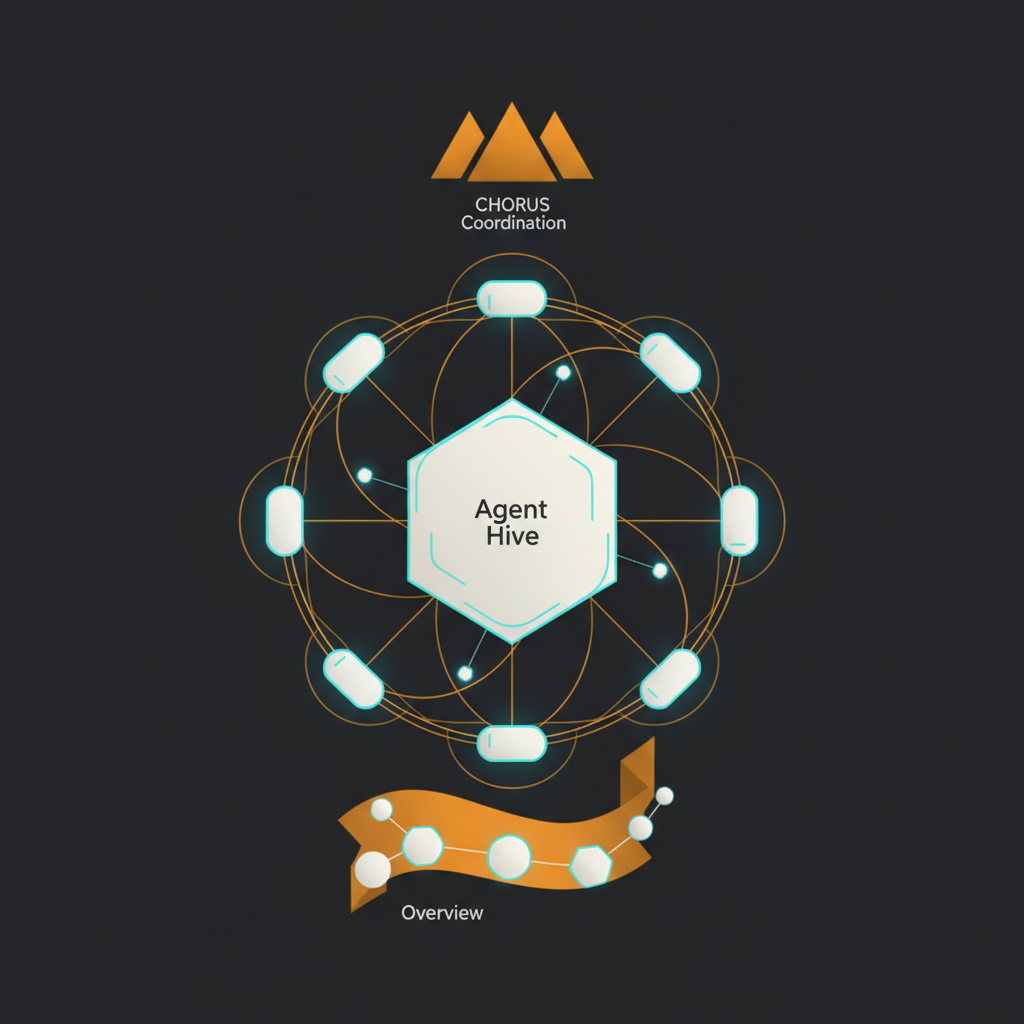
CHORUS coordination overview
The three operating models, side by side
There are three ways to coordinate a fleet of robots or software agents. Most operators have only seen the first one. The third is what CHORUS demonstrates.
Model
Who decides
Failure mode
Integration cost
Best for
Central orchestrator
One planner assigns work
Planner is a single point of failure
High per robot type
Predictable, repetitive workflows
Hand-coded coordination
Each robot follows fixed rules
Brittle when conditions change
Very high, grows with fleet
Small fixed fleets
Shared policy (CHORUS)
Each robot decides locally from a shared model
Drift, deadlocks, harder to audit
Low per new robot, high model training cost
Mixed fleets, varied tasks
The economic argument for the shared policy model is the marginal cost of adding a new robot or a new task. With a central orchestrator, every new robot type means a new adapter, new constraints, new scheduling rules. With a shared policy, you add cameras and motors and let the model handle it, assuming the model has seen something similar in training.
The cost you pay is observability. A central orchestrator has a log of every decision it made. A shared policy has thousands of local decisions per second across the fleet. You need different tooling to know what happened and why.
Why this matters outside robotics
The same architecture is showing up in software agent deployments. Replace "robot" with "agent" and "camera view" with "tool output," and the picture is identical:
A central orchestrator agent that assigns subtasks to worker agents. Familiar, debuggable, slow, and a bottleneck.
Hand-coded routing between agents using if-then logic. Fast, brittle, expensive to maintain.
A shared policy where every agent runs the same model, reads the shared context, and picks its next action locally. Cheap to scale, hard to audit.
If you are evaluating agent platforms right now, this is the axis to ask about. Most vendors are selling option one with extra steps. The interesting research, including CHORUS, is on option three.
graph TD
 A[Shared task: clear the loading dock] --> B[Robot 1: forklift]
 A --> C[Robot 2: humanoid]
 A --> D[Robot 3: mobile arm]
 B -.observes.-> E[Shared scene]
 C -.observes.-> E
 D -.observes.-> E
 E -.informs next action.-> B
 E -.informs next action.-> C
 E -.informs next action.-> D
The diagram above shows the loop: a shared instruction goes to every worker, each worker observes the same scene, and each picks its own next move. There is no arrow pointing to a central box because there isn't one.
What it costs to run, honestly
A shared VLA policy is not free. The training cost is high and is borne by whoever ships the model. The inference cost is borne by you, and it shows up in three places:
Compute per robot. Each robot needs enough onboard compute to run the policy at a useful frequency, typically 5 to 30 actions per second. That is a real bill of materials line item.
Network for shared context. Robots need to share enough state to avoid colliding with each other or duplicating work. CHORUS minimizes this, but it is not zero.
Eval and monitoring infrastructure. You cannot ship a policy you cannot measure. This is the line operators most often underestimate.
Here is a rough operator budget worksheet for a 10-robot mixed fleet, used the way a COO would size it before approving a pilot.
The point of the worksheet is not the exact number. It is that the cost shifts from integration engineering, which is lumpy and hard to staff, to compute and human review, which are smooth and easier to forecast. That is a real change in how you plan a robotics or agent program.
Governance: how do you know it is working
This is the section operators ask about last and should ask about first. A decentralized policy can fail in ways that a central orchestrator cannot. Two robots can both decide they are the one to pick up the box. Three robots can all wait for someone else to open the door. The model can do something subtly wrong that no single robot's logs reveal.
Eval-driven operations is the practice of running your fleet against a fixed set of recorded scenarios on a regular cadence and treating regressions as incidents. For a shared-policy fleet, the eval harness is not optional infrastructure. It is the only way you know the next model update did not break a coordination pattern that worked yesterday.
A minimal eval loop for a robot or agent fleet looks like this:
# Run the policy against recorded scenarios and flag regressions.# This is what tells an operator whether a model update is safe to ship.from chorus_eval import load_scenarios, run_policy, scorescenarios = load_scenarios("warehouse_v3") # 240 recorded tasksresults = []for s in scenarios: rollout = run_policy( policy="chorus-2026-03", scenario=s, seed=s.seed, ) results.append({ "task": s.name, "success": rollout.completed, "time_to_complete_s": rollout.duration, "collisions": rollout.collision_count, "deadlocks": rollout.deadlock_count, })baseline
The script above replays 240 recorded warehouse scenarios against the new policy and blocks the release if any task that passed last time now fails. That is the kind of gate you want between a model update and your floor.
This is the operator's equivalent of unit tests for a code change. It does not catch everything, but without it you are deploying blind.
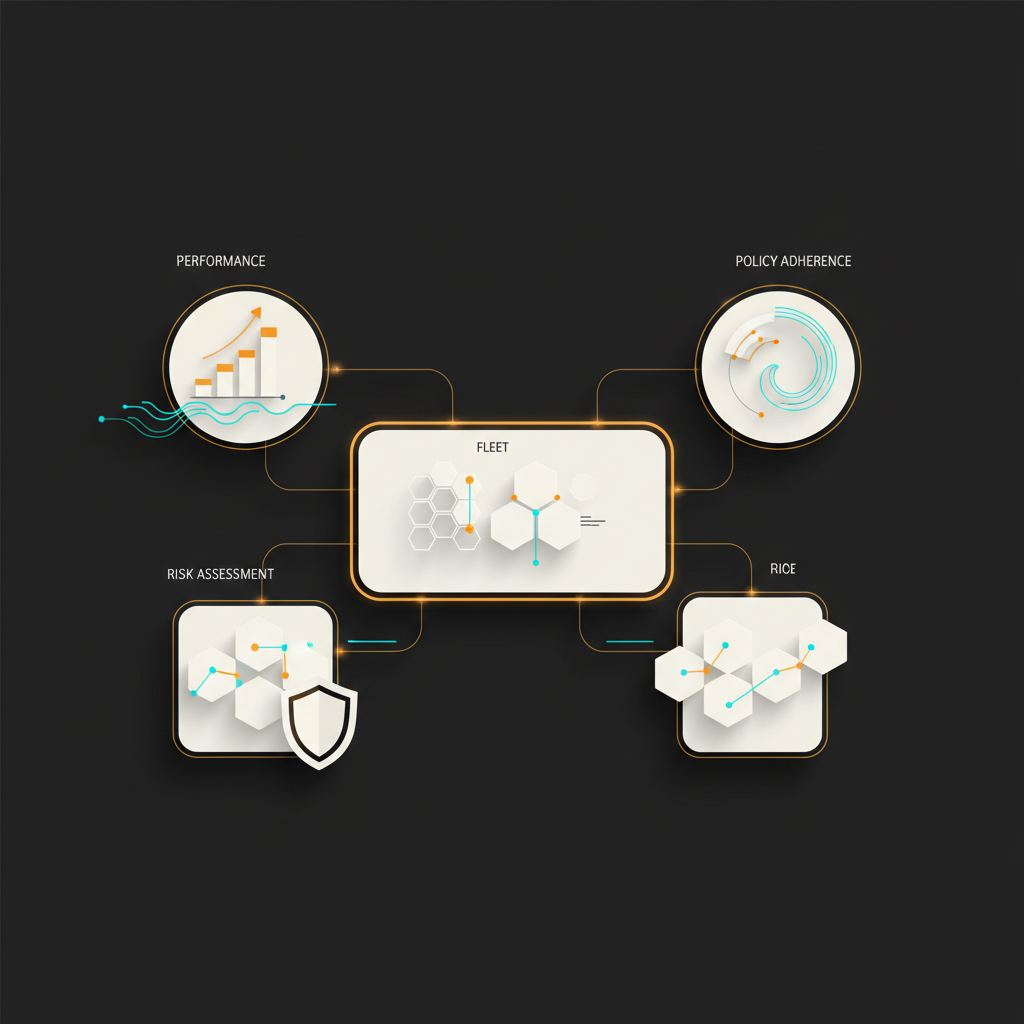
Eval dashboard for a shared-policy fleet
Accountability when something goes wrong
If a robot drops a pallet, who is responsible? With a central orchestrator, you can point to the planner's decision log. With a shared policy, you need three things:
Per-robot rollout logs: what the robot saw, what action it took, what the policy's confidence was.
Shared-context snapshots: what the fleet knew collectively at the time of the incident.
Policy version pinning: which exact model weights were on each robot at the time.
If your vendor cannot produce all three on request, you do not have an operable system. You have a demo.
When to pilot this, and when to wait
Not every operator should be running a CHORUS pilot in 2026. Here is a rough decision frame:
Pilot now if you have a mixed fleet (more than one robot type), tasks that change weekly, and a tolerance for non-deterministic behavior under human supervision.
Wait if your tasks are highly repetitive, your fleet is uniform, and your existing orchestrator is working. The savings will not justify the eval investment.
Skip entirely if you cannot staff a human review function. A shared policy without human-in-the-loop review is a liability, not an asset.
The same frame applies to software agent deployments. The question is never "is this technology ready." It is "is my organization ready to operate it." The eval harness, the review staffing, and the incident process are what you are really buying.