Illumination-Robust rPPG Heart-Rate Sensing for Robots
How service robots estimate heart rate from a standard RGB camera, and what it takes to keep the signal stable under real-world lighting conditions.
June 11, 2026·9 min read
Frequently asked questions
How long does it take to get a heart-rate reading?
Roughly 10 to 30 seconds of a reasonably stable view of a face. Shorter windows are noisier; longer windows assume the person sits still. Most deployments target a 15-second sliding window updated every 1 to 2 seconds.
Does it work on all skin tones?
Older rPPG methods were biased toward lighter skin because they tuned on lighter-skin datasets. Modern approaches that explicitly model the skin-tone axis, including the one in the recent paper, narrow the gap considerably. You still need to evaluate on a representative dataset for your population and report the per-group error, not just the average.
Can it measure anything beyond heart rate?
Yes. Respiration rate is straightforward from the same signal. Heart rate variability and blood oxygen saturation are active research areas with weaker reliability. Treat anything beyond pulse and breathing as exploratory.
The only platform to run an AI-native company.
14-day trial. No DevOps. No Sales call. Provisioned in under a minute.
What does it cost to add this to an existing robot?
If the robot already has an RGB camera and a CPU or small GPU, the marginal cost is engineering time: a few weeks for a competent team to integrate an open-source rPPG library, build an evaluation set, and wire it into the policy layer. The ongoing cost is the evaluation cadence, not compute.
How do I know when to retire or retrain the model?
Track mean absolute error in beats per minute against a reference (a wearable or chest strap on consenting subjects) on a recurring schedule. When error in any scene category drifts past your target for two consecutive weeks, that is your retrain signal. The point of the eval manifest above is to make that decision routine rather than dramatic.
A robot that reads a human heart rate from a standard color camera can flag stress, fatigue, or distress without touching anyone.
The hard part is light: shadows, sunlight, and motion ruin the signal. Recent work shows how to keep estimates stable across changing rooms.
For operators in elder care, retail, and hospitality, this turns a camera the robot already has into a passive vital-sign sensor.
Expect accuracy within a few beats per minute under cooperative conditions, with graceful degradation rather than silent failure.
The deployment risk is governance: consent, retention, and clear scope of use matter more than the algorithm choice.
Physiological awareness gives a service robot a reason to slow down, hand off to a human, or check in. A nursing robot that notices a resident's heart rate climbing during a transfer can pause. A retail greeter that detects a customer's distress can route them to staff. The sensing approach behind this, remote photoplethysmography (rPPG), reads tiny color changes in skin caused by blood flow, using nothing more than the camera the robot already carries. The open problem, and the subject of recent work on illumination-robust rPPG for robots, is making the signal survive real lighting.
What the camera is actually measuring
When your heart beats, blood volume in the skin rises and falls. That changes how much red, green, and blue light the skin reflects. The change is too small for a person to see, but a camera running at 30 frames per second can pick it up across a few hundred pixels of cheek or forehead.
That is the entire physical basis. No infrared sensor, no contact pad, no wearable. The robot looks at a face for roughly 10 to 30 seconds and produces a heart rate in beats per minute.
For an operator, the business read is simple. If you already have a robot with a camera in front of customers, patients, or employees, you have a potential vital-sign sensor at zero marginal hardware cost. The cost is software, calibration, and governance.
A service robot observing a seated person, with a small overlay box on the face indicating the region used for heart-rate estimation.
Why lighting breaks everything
The signal from a beating heart is on the order of 1% of the pixel value. Anything that also changes pixel values at a similar scale becomes noise. The big offenders:
Sunlight through a window that drifts across a face during the measurement.
Fluorescent or LED lights that flicker at the mains frequency.
A robot that moves, changing the angle between face, light source, and lens.
A person who turns their head or talks.
A lab demo done under flat studio light will not survive a hospital corridor at 3pm in summer. This is the gap the recent research targets: keeping the heart-rate estimate stable when the light is uncontrolled.
The processing pipeline at a glance
flowchart LR
 A[Camera frames] --> B[Face and skin detection]
 B --> C[Region of interest tracking]
 C --> D[Per-channel color signal]
 D --> E[Illumination correction]
 E --> F[Band-pass filter 0.7 to 4 Hz]
 F --> G[Spectral peak picking]
 G --> H[Heart rate in BPM]
 E -.->|quality score| H
The two stages that decide whether the system works in production are illumination correction and the quality score. The quality score is what lets the robot say "I am not confident" instead of returning a wrong number with full confidence. That distinction is what separates a useful sensor from a liability.
How the illumination-robust approach works
The core idea in the arXiv paper is to separate the part of the color change that is caused by the heartbeat from the part caused by light changing on the skin. Light changes affect all color channels in a predictable, correlated way. The pulse affects them differently, with green carrying most of the signal because hemoglobin absorbs green light strongly.
By projecting the red, green, and blue traces into a space where light-driven motion lives on one axis and pulse-driven motion lives on another, you can throw away the lighting axis. Methods in this family include CHROM and POS (plane-orthogonal-to-skin); the recent work extends them with a per-frame estimate of how much the lighting itself is changing, then weights frames accordingly.
The practical effect: when a cloud passes the window, the system does not panic and emit a heart rate of 180. It either corrects the change out or marks those seconds as low quality.
A minimal reference implementation
Here is a compact Python sketch that captures the structure. It is not a deployment artifact, but it shows what each step does so a non-developer can have an informed conversation with their engineering team.
# Estimate heart rate from a short video of a face.# Returns BPM and a confidence score between 0 and 1.import numpy as npfrom scipy.signal import butter, filtfilt, welchdef pos_signal(rgb): # rgb: array of shape (frames, 3), mean color of skin region per frame mean = rgb.mean(axis=0) normalized = rgb / mean - 1 # Project onto the plane orthogonal to the skin-tone axis proj = np.array([[0, 1, -1], [-2, 1, 1]]) @ normalized.T alpha = proj[0].std() / (proj[1].std() +
The line that matters for operations is the last one. The function returns a confidence number alongside the heart rate. Your application logic should ignore any reading below a threshold rather than show it to a clinician or trigger an alert.
How it compares to alternatives
If you are deciding what to put on a robot or in a room, the relevant comparison is not "rPPG vs. nothing." It is rPPG against the other ways to read a pulse without a clinical chest strap.
Approach
Hardware cost
Setup per person
Accuracy in good conditions
Failure mode
rPPG via existing RGB camera
None added
None
Within 2 to 5 BPM
Degrades with bad light, motion
Wrist wearable (consumer)
100 to 300 USD per person
Pairing, charging
Within 2 to 4 BPM
Person forgets to wear it
Chest strap
60 to 150 USD per person
Strap on, gel
Within 1 to 2 BPM
Refusal, discomfort
Thermal camera pulse
1,500 to 5,000 USD per unit
None
Within 3 to 6 BPM
Cost, calibration
Radar pulse sensor
200 to 800 USD per unit
None
Within 3 to 7 BPM
Multi-person ambiguity
The decision usually comes down to two questions. Does every person you want to monitor agree to wear or touch something? And do you already have a camera looking at them? If the answers are no and yes, rPPG is the cheapest path to a heart-rate feed.
Where this fits in an agentic operations stack
A robot that reports vital signs is not interesting by itself. It becomes interesting when the reading feeds a decision an agent can make: pause a task, escalate to a human, log an incident, adjust a script. The pattern looks like this.
+-----------------+ +------------------+ +---------------------+| Robot camera | -> | rPPG estimator | -> | Physiology stream |+-----------------+ +------------------+ +----------+----------+ | v +-------------------------------+-----------+ | Agent policy: thresholds, eligibility, | | consent flags, escalation rules | +-------------------------------+-----------+ | +----------------------------------+---------------------+ v v v +-------------+ +---------------+ +-------------+ | Human alert | | Task throttle | | Audit log | +-------------+ +---------------+ +-------------+
The point of the diagram: the model is the easy part. The hard part is the policy layer that decides what a reading means in your context. A heart rate of 110 BPM in a physical therapy session is expected. The same reading in a quiet waiting room is a signal. The agent needs context, not just numbers.
What an eval suite looks like
Treat the heart-rate sensor like any other production model: test it against a labeled dataset, track drift, and gate deployment on metrics. A simple evaluation manifest:
Two things to notice. First, the targets differ by scene. A single average number across all conditions hides the scenes where the sensor fails. Second, readings below a confidence threshold are rejected outright. A robot that says "I do not know" is more useful than one that guesses.
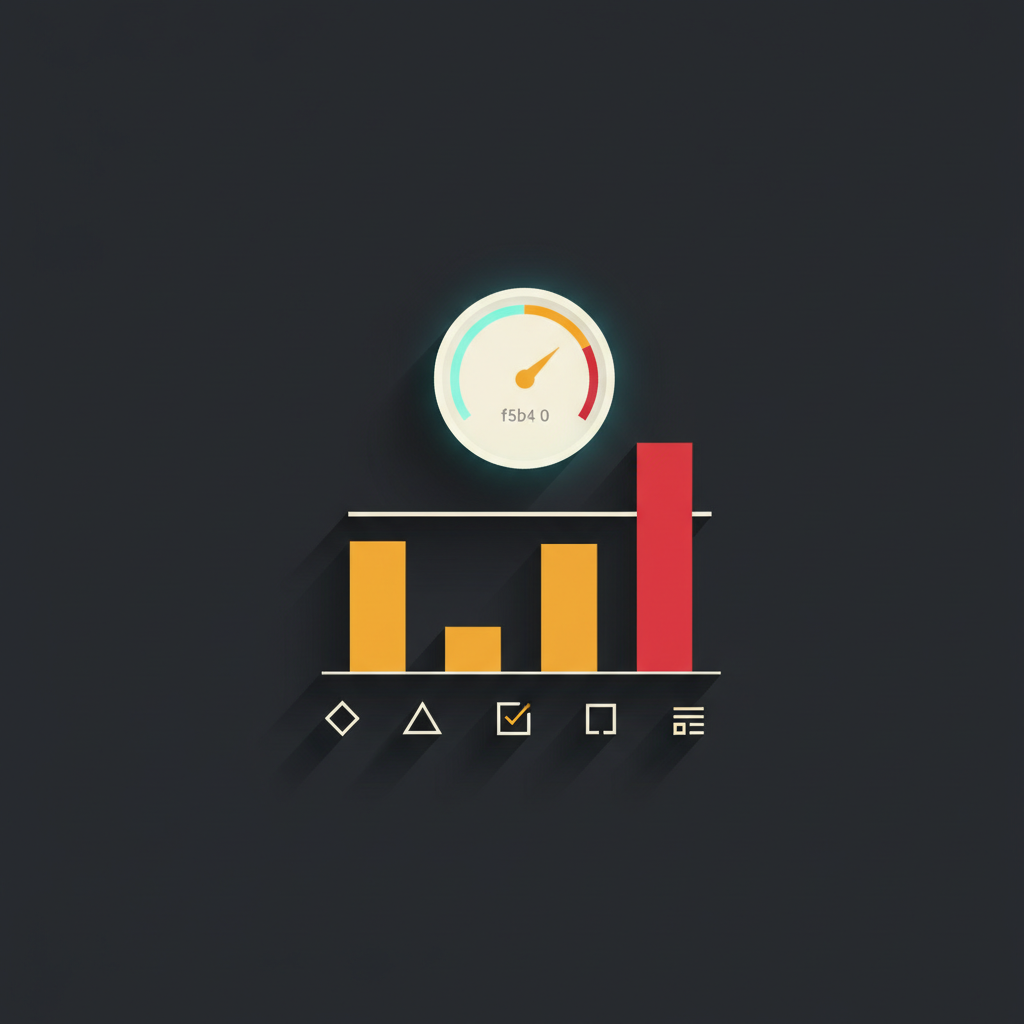
A dashboard mockup showing mean absolute error in beats per minute broken down by lighting condition, with one bar in red exceeding its target.
What this is good for, and what it is not
Where it earns its keep:
Elder care and assisted living, where residents tolerate cameras but resist wearables.
Pediatric and post-surgical observation in hallways and waiting areas, where staff cannot watch every patient continuously.
Customer-facing kiosks and concierge robots, as a distress detector that prompts a human handoff.
Workplace robotics, where a robot pausing because an operator looks fatigued is a safety feature.
Telehealth triage, where a clinician on a video call gets an estimated pulse without asking the patient to do anything.
Where it does not belong:
Any setting that requires clinical-grade accuracy. This is a screening signal, not a diagnostic.
Covert monitoring of employees or customers. The legal and reputational cost will exceed any benefit.
Highly mobile subjects in poor light. The system will simply refuse to give you a reading, which is correct behavior but unhelpful for your use case.
Governance you should figure out before deployment
This is the part that decides whether the project ships or stalls in legal review. Decide these before you write code, not after.
Consent. Heart rate is a biometric in most jurisdictions. You need explicit notice and, in many cases, opt-in.
Retention. The raw video is sensitive. The derived heart rate is sensitive. Default to processing on-device, storing only aggregates, and deleting raw frames within minutes.
Scope. Document what the system does and what it does not do. "Detects pulse to prompt human check-in. Does not diagnose, does not store identifying frames."
Auditability. Log every reading that triggered an action, with the confidence score. If a regulator or family member asks why the robot escalated, you should be able to answer.
Failure behavior. Specify what happens when the sensor is uncertain. Silence is usually the right default.
1e-8
)
return proj[0] + alpha * proj[1]
def heart_rate(rgb, fps=30):
s = pos_signal(rgb)
# Keep only frequencies that correspond to 42 to 240 BPM
b, a = butter(4, [0.7, 4.0], btype='band', fs=fps)
s = filtfilt(b, a, s)
f, p = welch(s, fs=fps, nperseg=min(len(s), 256))
band = (f >= 0.7) & (f <= 4.0)
peak = f[band][np.argmax(p[band])]
bpm = peak * 60
# Confidence: how much of the in-band energy sits at the peak